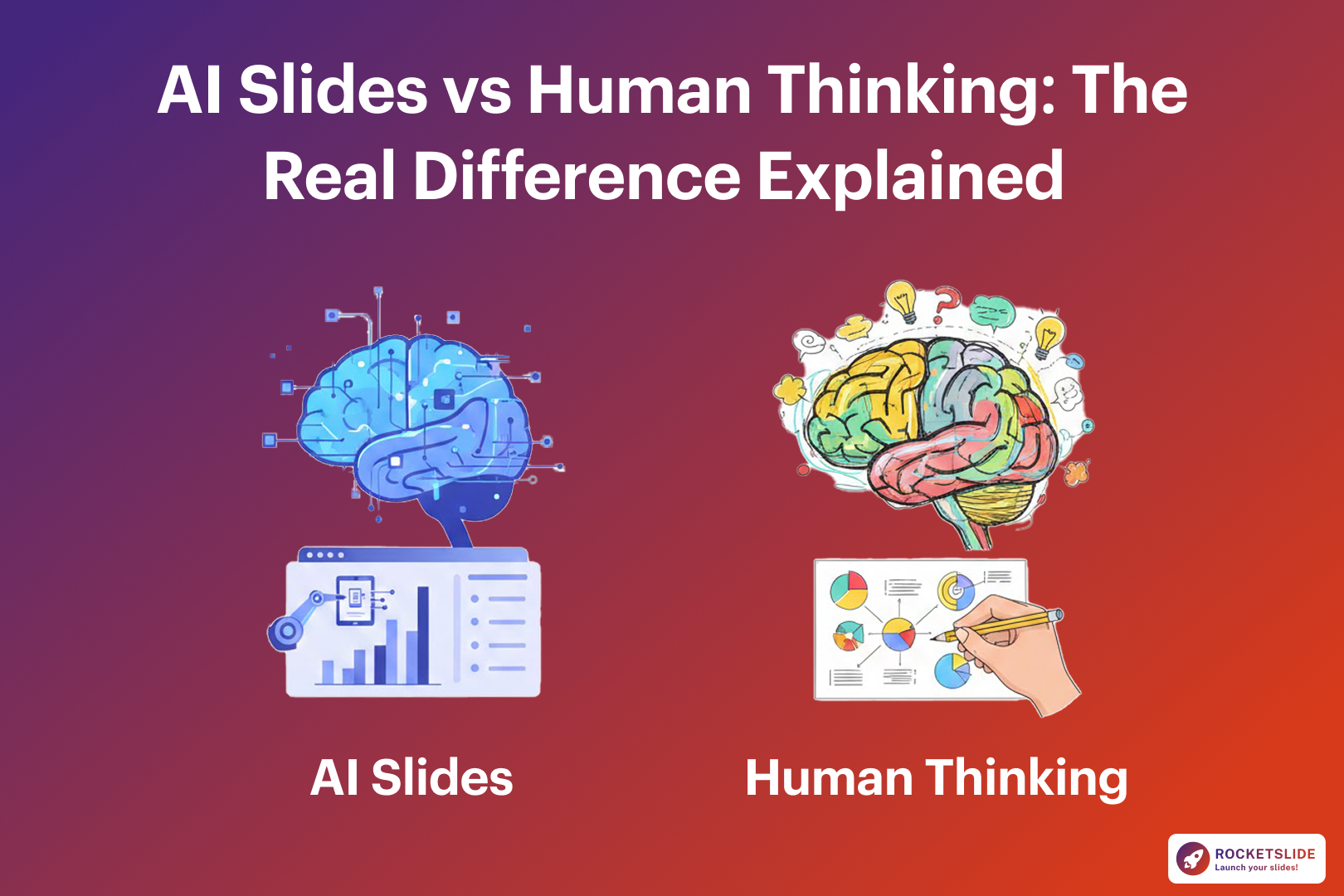
Introduction: Why AI Slides Need Human Thinking to Create Real Impact
You can create presentations today faster than ever. With an AI presentation maker, anyone can turn text into slides within minutes. With AI tools, layouts appear automatically, visuals are suggested, and structure is generated without manual effort. But despite this speed, many presentations still fail to connect with audiences.
Why? Because speed alone doesn’t create impact.
In the first few minutes of a presentation, people decide whether to pay attention or not. AI can help you to create slides quickly, but human thinking lends direction, relevance, and meaning to presentations.
In this blog, we’ll break down how AI-generated slides and human thinking play different roles in presentation creation, why both matter, and how combining them leads to stronger, more effective presentations. We’ll also see how tools like RocketSlide support this balance by handling the slide creation, so you can focus on shaping ideas that matter.
Understanding the Difference Between AI Slides and Human Thinking
AI and human thinking serve very different roles in presentation creation. Understanding this is the key to using AI effectively.
What AI Slides Do Well
AI-powered tools excel at execution. An AI slide generator can take raw content and convert it into a structured slide deck. This includes:
- Automatically organizing content into sections
- Applying consistent layouts and spacing
- Suggesting visuals, icons, and charts
- Maintaining design consistency across slides
AI tools streamline this process and help users move from idea to presentation without starting from a blank slide.
Where Human Thinking Matters Most
Human thinking gives a presentation purpose and direction by shaping intent, relevance, and what truly matters to the audience. It brings:
- Context and intent
- Audience awareness
- Story flow and emotional relevance
- Judgment about what matters and what doesn’t
AI can organize information, but it doesn’t understand your audience’s expectations, objections, or priorities. That responsibility remains human.
First 30 Seconds Depend on Human Thinking
Research consistently shows that audience attention is fragile. People decide quickly whether a presentation is worth listening to or not. The opening moments are not about visuals; they’re about relevance.
Human thinking determines:
- How the presentation opens
- What problem is framed first
- Why the audience should care
AI can help format the opening slide, but it can’t decide which idea deserves to be first. That decision shapes engagement.
AI Slides Improve Efficiency, Not Understanding
AI excels at saving time, but it does not replace meaning or judgment.
Speed and Structure
Using an AI presentation maker, professionals can:
- Create drafts faster
- Reduce repetitive formatting
- Focus more on content than layout
This is especially useful for recurring decks, internal updates, or time-sensitive presentations.
Limits of Automation
However, AI-generated slides can feel generic if human thinking isn’t applied. Common issues include:
- Too much information per slide
- Weak narrative flow
- Lack of emphasis on key ideas
This is where design judgment and storytelling come in.
Presentation Storytelling: Where Humans Lead
A good presentation tells us a story. They guide audiences from problem to insight to conclusion.
Why Storytelling Can’t Be Automated
Storytelling requires:
- Understanding audience emotions
- Choosing the right examples
- Knowing when to pause, simplify, or emphasize
AI can suggest structure, but presentation storytelling depends on a human perspective. It’s not just about slides, but it’s about sequencing ideas in a way that feels logical and engaging.
You can explore more content around storytelling approaches in the RocketSlide blogs section, which focuses on clarity-driven presentation strategies.
How AI and Human Thinking Work Best Together
The strongest presentations are not created by AI alone or humans alone, as they are built through collaboration.
The Ideal Workflow
- Human thinking defines the goal
What is the message? Who is the audience? What action should follow? - AI handles structure and design
An AI slide generator transforms content into a clean, consistent deck. - Human refinement adds meaning
Slides are reviewed, simplified, and adjusted to improve clarity and emphasis.
RocketSlide is built around this balance. Instead of choosing between speed and clarity, users can focus on shaping ideas while the platform handles execution. This approach shows how an AI slide generator can support faster, more thoughtful presentations without compromising structure or intent.
Use Cases Where Balance Matters Most
Business and Strategy Presentations
Executives and teams often rely on AI to summarize reports into slides. AI speeds up the process, but human judgment ensures insights are framed correctly.
Startup Pitch Decks
Investors don’t just look at visuals; they listen for clarity, confidence, and relevance. Using AI to build the structure while applying human thinking helps founders avoid clutter and focus on what matters.
You can explore ready-to-use presentation templates that support this balance without forcing rigid designs.
Education and Training
Teachers and trainers benefit from AI-generated slides, but learning outcomes improve when content is structured with a human understanding of student needs.
Common Mistakes When Relying Only on AI Slides
- Letting AI decide the slide's importance
- Overloading slides with information
- Ignoring audience expectations
- Treating AI output as final instead of a draft
AI should accelerate your work, not replace thinking.
How to Use AI Slides Without Losing Impact
Here are practical tips to get the best results:
- Start with a clear message before generating slides
- Review AI-generated content critically
- Remove anything that doesn’t support your main point
- Use AI as a draft, not the final answer
When AI supports your thinking rather than replacing it, presentations become clearer and more engaging.
FAQs: AI Slides vs Human Thinking
1. Can AI replace presentation thinking?
No. AI assists with structure and speed, but human thinking defines relevance, intent, and storytelling.
2. Are AI-generated presentations good enough for professional use?
Yes, when reviewed and refined by humans. AI creates strong foundations, not finished narratives.
3. Do AI slides reduce creativity?
No. They reduce manual effort, freeing time for creative thinking and message refinement.
4. Is using an AI presentation maker suitable for teams?
Yes. AI improves consistency across decks while allowing teams to focus on content and discussion.
Conclusion
AI has changed how presentations are built. Slides that once took hours can now be created in minutes. But meaning, clarity, and impact still come from human thinking.
The future of presentations isn’t AI versus humans, but it’s about AI supporting human ideas. When structure, clarity, and speed come together, presentations don’t just look better, they communicate better.
If you want to experience how this balance works in practice, try RocketSlide and see how AI-powered structure and human thinking work better together.